Please update your browser. It looks like you are using an old version of the Microsoft Edge browser. To get the best experience with the Pfeiffer website, please update your browser.

Vacuum Valves

Essential for the design of a vacuum system

vacuum valves

Vacuum valves play a crucial role in the design and functionality of vacuum systems, ensuring precise control and reliability across various industries and research applications.

Our valve portfolio includes a wide range of pressure control valves and isolation valves, available with different actuators and flange types to meet diverse operational needs.

Types of vacuum valves

Basic vacuum systems consist of three core types of equipment: vacuum pumps, vacuum chambers, and vacuum valves. The selection of the right vacuum valves is crucial for optimizing system performance and the interaction of these core components.

Vacuum valves are generally classified into two main categories: isolation valves and pressure control valves.

Isolation valves

These valves isolate gas flow and can be manually, pneumatically, or electrically operated. They are crucial for maintaining vacuum conditions by isolating sections of a vacuum system.

Suitable for various applications, including semiconductor manufacturing, R&D, and industrial processes, isolation valves ensure reliable sealing and operational efficiency.
  • angle_valves

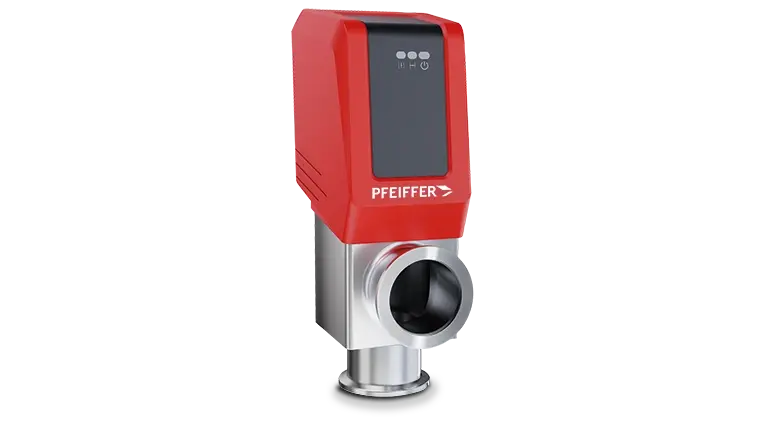
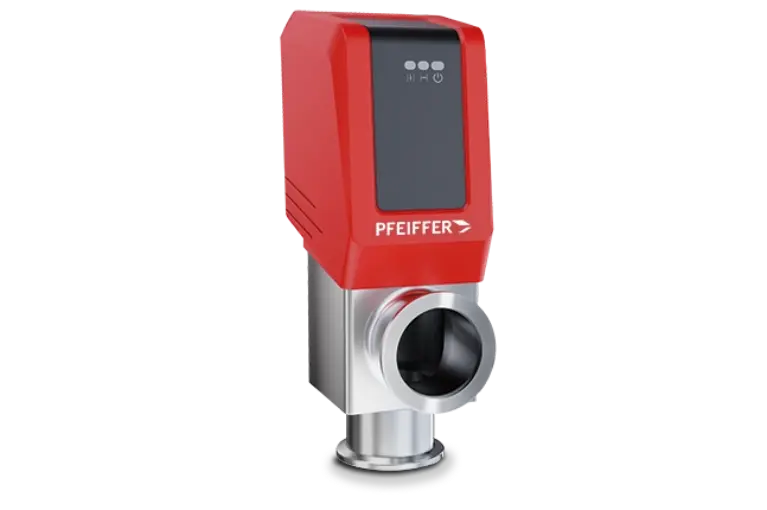
    Angle valves

    Reliable isolation for a wide range of vacuum applications – ideal for research, coating, semiconductor applications and industrial systems.

    Shop now
  • hv_gate_valves

    HV gate valves

    High-conductance values for molecular flows – ideal for high vacuum applications

    Shop now
  • HV pendulum valve

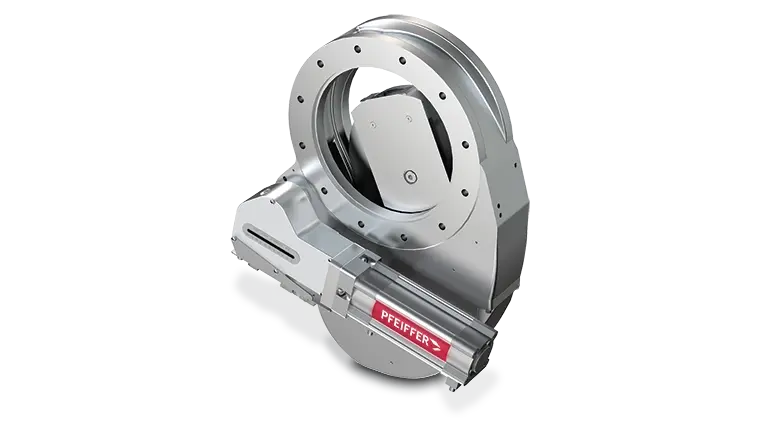
    HV pendulum valves

    Smooth actuation and high conductance – ideal for applications with limited space and a need for reliable vacuum isolation

    Shop now
  • UHV gate valve

    UHV gate valves

    High conductance and excellent sealing – ideal for ultra-high vacuum applications

    Shop now
  • Ball valves

    Ball valves

    Capable of handling harsh processes – suitable for applications requiring reliable sealing and durability

    Shop now
  • inline_valves

    Inline valves

    Efficient gas flow and high differential pressures – ideal for industrial and research applications

    Shop now
  • Vent valves

    Vent valves

    Controlled venting of vacuum systems to atmospheric pressure – essential for safe maintenance and system shutdowns

    Shop now
  • Diaphragm valves

    Diaphragm valves

    Optimal for high vacuum conditions

    Shop now
  • butterfly valves

    Butterfly valves

    Ideal for isolating sections of a vacuum system in high vacuum applications

    Shop now

Pressure control valves

Pressure control systems consist of three essential components: valves, controllers, and gauges. The primary function of the valves is to control the pressure inside a vacuum chamber and the gas flow within vacuum systems.

These pressure control valves are ideal for applications demanding precise process control, such as those in the semiconductor industry and for coating applications.
  • gas_contol_valves

    Gas control valves

    Precisely controlled gas flow using a solenoid-actuated metering mechanism.

    Shop now
  • gas_dosing_valve

    Gas dosing valves

    Reliable, controlled gas flow and pressure in vacuum systems

    Shop now

Actuators

vacuum_valves_1
Valves can be activated in a variety of ways.

Isolation valves are typically operated manually with a hand wheel or quick-closing/quick-opening mechanism, or pneumatically, using compressed air.

However, our Series E isolation valves operate via electrical actuation. Pressure control valves are also electrically actuated, driven by a motor.

Shop now

Manual actuation

Manual valves can be operated without any electronics via a hand wheel or a quick-closing/quick-opening mechanism.

Hand wheels provide precise, gradual control for smooth operation, while quick-opening/closing mechanisms enable rapid actuation for fast isolation or emergency situations.

Pneumatic actuation

Pneumatically actuated valves require an oil-free compressed air supply. This is used to move an internal piston, which opens or closes the valve.

Electric actuation

Electric actuation utilizes motors to convert electrical energy into precise mechanical movement. This opens or closes the valve without the need for compressed air.

Electro-pneumatic actuation

Valves with electro-pneumatic actuation contain a pneumatically actuated valve with a built-in solenoid valve to control the compressed air supply.

A solenoid valve is an electrically controlled valve that opens or closes when a magnetic field is generated by an electric current.

This allows the valve to be operated remotely via an electrical signal, combining the fast and reliable motion of pneumatic actuation with the convenience and control of electronic switching.

FAQ

What is a vacuum valve?

A vacuum valve is a mechanical component that controls the flow of gases within a vacuum system.

Each valve has a different role: It may simply open or close to start or stop gas flow, or it may control the flow to help establish or maintain a desired pressure level. Some valve types can also redirect gas – such as by venting a vacuum chamber with clean, dry gas – to safely bring the system back to atmospheric pressure or protect sensitive components during shutdown.

Vacuum valves come in various forms with different actuation methods, including manual, pneumatic, and electrical designs.

Vacuum valves are used in combination with vacuum pumps and vacuum chambers. They are essential for reliable and precise operation in applications such as semiconductor manufacturing, thin-film coating, and in research laboratories.

What is the difference between the various valve types?

Each valve type serves a specific function within a vacuum system.
The overview below highlights the main characteristics and use cases to help you choose the right one for your application.

Valve type
Typical function
Key advantages
Typical applications
Gate valve
Opens and closes with a flat plate to isolate sections
Very high conductance, suitable for high and ultra-high vacuum
Angle valve
Redirects gas flow by 90° using a seal, plug and stem
Compact design suitable for systems with piping restrictions that need a change in direction of flow
General vacuum systems, R&D setups, all markets
Butterfly valve
Rotating disk to isolate or control flow
Lightweight, quick actuation
Ball valve
On/off flow control via a pivoting ball
Compact and robust design, fast actuation
Diaphragm valve
Flow control via a flexible membrane
Clean operation, low risk of contamination
Pendulum valve
Flat sealing motion with a rotating gate
Suitable for tight spaces, high conductance, minimal particles
Semiconductor and thin-film deposition, isolation of turbopumps
Vent valve
Allows controlled venting to atmosphere to relieve excess pressure
Safe pressure equalization, protects components
Maintenance and chamber venting

How are valves activated?

Valves can be operated in three different ways: manually, pneumatically, and electrically.

  • Manually operated valves are opened via a hand wheel or a quick-closing/quick-opening mechanism. Quick-opening/closing mechanisms enable rapid actuation for fast isolation or emergency situations.
  • Pneumatically operated valves use compressed air to move an internal piston or diaphragm, which opens or closes the valve mechanism.
  • Electric actuation uses motors to convert electrical energy into precise mechanical movement, enabling automated and reliable control without the need for compressed air.
In addition, there is a combined version available: Electro-pneumatically operated valves also use compressed air, but with a built-in solenoid to control the air flow. This solenoid valve is an electrically controlled valve that opens or closes when a magnetic field is generated.

For monitoring purposes, position indicators are available to determine whether a valve is open or closed. Manual valves typically feature a visual indicator, while pneumatic valves can provide direct electrical feedback to the vacuum system, ensuring precise control and monitoring. These indicators are usually mounted directly on the valve stem or actuator housing, where they track the position of the moving element inside the valve.
Which criteria should I consider when selecting a vacuum valve?

There are several criteria you should consider to find a suitable vacuum valve for your application.

  • Purpose: The application significantly influences the selection of the valve. Requirements vary depending on whether the valve is primarily used to open and close vacuum lines or to control pressure.
  • Installation and system compatibility: The physical dimensions of the available installation space and the flanges of the vacuum pump and chamber have a direct influence on the selection of the appropriate valve size.
  • Pumped medium: The composition of the gases flowing through the valve strongly influences the choice of materials to ensure the durability and reliability of the valve.
  • Temperature: Knowledge of the expected temperatures is essential in order to select the appropriate materials for the valve body and seals to ensure long-lasting functionality.
  • Pressure: Understanding the pressure conditions the valve will be exposed to influences the valve selection.

Contact our experts and find the perfect vacuum valves for your application.

What makes vacuum valves from Pfeiffer special?

Series E vacuum valves are a direct replacement for pneumatically and electropneumatically actuated valves, combining their robustness and functionality with the benefits of fully electric actuation. They eliminate the need for compressed air and external solenoid valves while avoiding the typical drawbacks of electromagnetically actuated valves, such as high power consumption, limited positioning accuracy, and increased heat generation. This results in precise, reliable valve control with lower energy use and simplified system integration.

Our pressure control valves incorporate two key innovations designed for exceptional performance:

  • The motor control technology inside the controller enables rapid operation and fine position resolution, allowing a fast response to changing process conditions.
  • Our adaptive pressure control algorithm works in tandem with the motor control to continuously adjust the valve response according to current conditions. This helps accurately maintain the target pressure.

Which pressure ranges can the valves be used for?

Vacuum valves are suitable for all vacuum applications, with the choice of valve depending on the sealing technology required for specific pressure levels:

  • For high vacuum applications, Pfeiffer offers a wide range of valves with elastomer seals and ISO-KF/ISO-K flanges, ensuring reliable performance.
  • For ultra-high vacuum applications, valves with metal seals and CF flanges are the best choice. All-metal valves with fully metallic seals are also available for applications at high temperatures.

Which seals and sealing mechanisms are available?

Seals and sealing methods play a decisive role in the selection of the right valve for the vacuum system.

As the temperature resistance and outgassing rates vary, the choice of seal is ultimately decided according to the demands of the process. This includes the necessary temperature resistance and the required vacuum level.

  • Elastomer seals provide reliable sealing for high vacuum applications. Their temperature resistance depends on both the elastomer material and actuation type – certain valves therefore have different properties that make them more suitable for particular applications.
  • Metal seals do not require elastomers. This means that they have extremely low outgassing rates and are therefore ideal for ultra-high vacuum applications.

What types of high vacuum valves are available?

At Pfeiffer, you will find a broad range of high vacuum valves for different installation and performance needs. The choice of the right valve depends on several factors, including the process sequence, process temperature, ultimate vacuum, and gas composition. High and ultra-high vacuum systems require valves that combine reliable sealing, high conductance, and durability.

  • Angle valves divert the gas flow by 90°, while inline valves – with opposite connecting flanges – allow easy installation in straight pipelines. Both variants usually use bellows as a seal.
  • Gate valves and isolation pendulum valves are ideal for confined spaces and ensure unobstructed gas flow with optically free passage. They are designed for high and ultra-high vacuum and often open at low differential pressures. They are the ideal choice for airlocks or upstream from vacuum pumps.
  • Ball valves can also be used in certain high vacuum applications. Cost-optimized KF designs show leak rates of 10-6 mbar l/s and are temperature resistant up to 80 °C. Special designs are suitable for the HV range and can withstand temperatures up to 150 °C.

Flanges

hv_pendulum_valves_1
Flanges are essential components used to connect various parts of a vacuum system, ensuring a secure and leak-tight assembly. They enable the integration of vacuum pumps, valves, and other components, maintaining system integrity and efficiency. The following flange types are available:

  • ISO-KF
  • ISO-K
  • ISO-F
  • CF
  • Threads


Shop now