The role of vacuum in thin-film coating
Unlike spray or powder coating, where material is applied in an open atmosphere, thin-film coating takes place under controlled vacuum conditions. Here, vacuum is not just a boundary requirement: It defines how the coating forms.
Uniform and reproducible thin-film coatings start with a reliable vacuum.
Whether the process is physical (PVD) or chemical (CVD, PECVD, or ALD), all methods rely on reduced pressure to control how material is transported and transformed into a functional thin layer. Under high vacuum, the extended mean free path allows atoms, ions, or precursor molecules to reach the substrate with minimal scattering or unwanted reactions. This ensures dense, uniform films with reproducible optical, electrical, or mechanical properties.
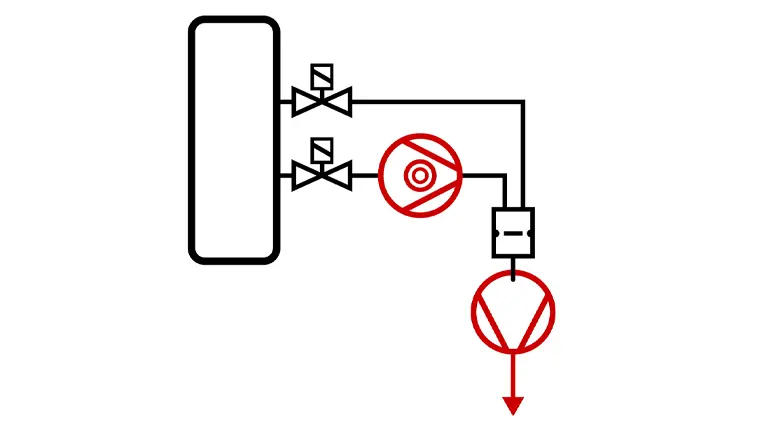
To maintain this consistency, vacuum stability is crucial. Pressure variations or micro-leaks immediately affect plasma behavior, gas composition, and ultimately film growth. Precise measurement and regulation – through calibrated gauges, regulating valves, and reliable vacuum generation – keep the process window steady and results predictable.