Please update your browser. It looks like you are using an old version of the Microsoft Edge browser. To get the best experience with the Pfeiffer website, please update your browser.

Vacuum Gauges

Precise total pressure measurement for every application

digiline_hpt_1

Accurate pressure measurement is the foundation of any reliable vacuum process. From rough to ultra-high vacuum, the right gauge ensures stable operation, process control, and optimal product quality. Our vacuum gauges deliver accurate readings, ensuring precision, durability, and easy system integration.

How to measure vacuum – reliable solutions from Pfeiffer

Vacuum is measured by comparing the pressure inside a space or chamber to atmospheric pressure, which is around 1,013 hPa (mbar) at sea level.

One way to precisely measure pressure is by using vacuum gauges. Since the vacuum range extends from rough to ultra-high vacuum, different gauge technologies are required. In rough and medium vacuum, vacuum gauges with direct pressure measurement, such as capacitive or piezoresistive gauges, can be used. Cold cathode (Penning) gauges are suitable for high vacuum, while hot cathode ionization gauges are ideal for ultra-high vacuum.

With decades of expertise, Pfeiffer offers the right vacuum gauge for every pressure range and application. From analog and digital vacuum gauges with various types of sensors like Pirani, hot cathode, cold cathode, capacitive, or piezoresistive, to custom solutions such as temperature-controlled capacitive gauges for special applications like steam sterilizable freeze dryers.

Our portfolio

Pfeiffer offers gauges that cover the full spectrum of pressure measurement technologies.

Digital vacuum gauges transmit precise, interference-free readings via interfaces such as RS-485 or fieldbus, making them ideal for automated systems and data-driven monitoring.

Analog vacuum gauges, on the other hand, provide a continuous voltage or current signal proportional to pressure. This straightforward output ensures simple, reliable integration into industrial control setups.

While most gauges can be put under one of these categories, our portfolio also includes specialized gauges that are protected against radiation as well as mobile gauges. All instruments are designed for accurate measurement, ensuring that vacuum processes can be reliably controlled.
  • digiline_hpt_1

    DigiLine

    Devices with digital signal output

    Learn more
  • image1_activeline_pbr360_12770

    ActiveLine

    Devices with analog signal output

    Learn more
  • modulline_1

    ModulLine

    Total pressure measurement in areas with ionizing radiation

    Learn more
  • image2_centerline_itr90_8939

    CenterLine

    Analog gauges, modern controllers and automatic detection

    Learn more
digiline_hpt_1

DigiLine – digital vacuum gauges

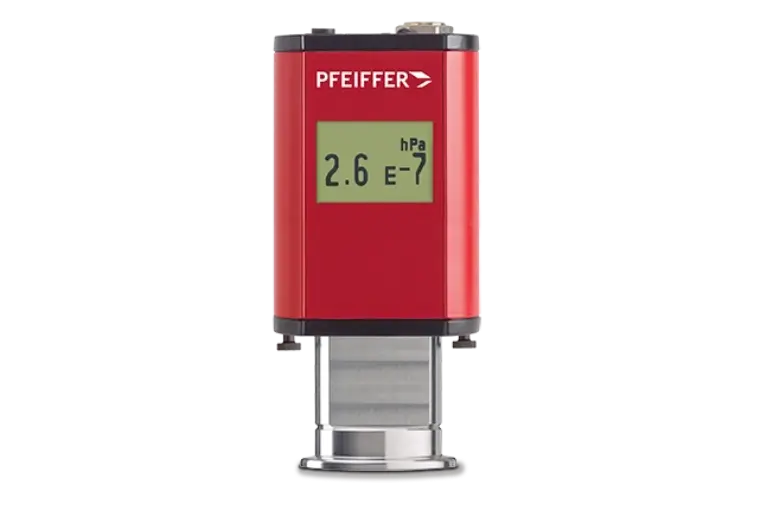
The DigiLine offers precise digital vacuum gauges for industrial, research, analytical, and semiconductor applications. Depending on your process, they can be equipped with Piezo, Pirani, capacitive, hot cathode, or cold cathode sensors.

With modern digital interfaces, such as RS-485, Profibus, Profinet, or EtherCAT, DigiLine gauges ensure reliable total pressure measurement and easy connectivity.

Shop now

Benefits

  • Wide measurement range from overpressure to ultra-high vacuum.
  • Robust housing with M12 connectors and IP54-rated protection, ensuring reliable performance even in dusty or wet industrial settings.
  • Reliable, error-free data transfer to computers or control units, ensuring accurate, real-time data transfer for reliable process monitoring.

image1_activeline_pbr360_12770

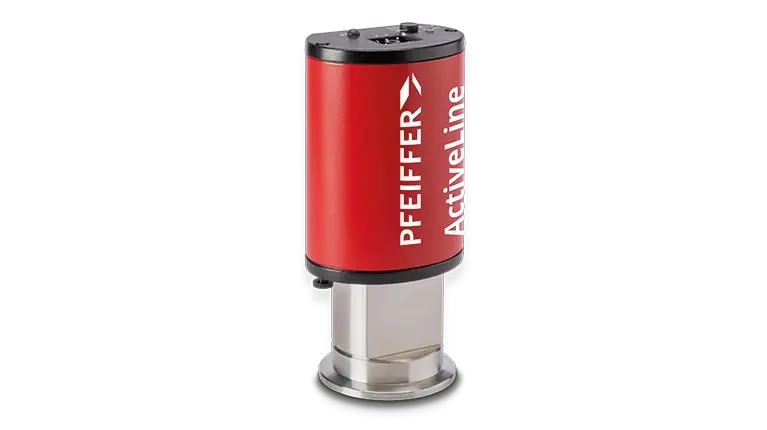
ActiveLine – analog vacuum gauges

The ActiveLine provides flexible analog vacuum gauges covering the pressure range from overpressure to high vacuum. Their compact design saves valuable space. Additionally, the pressure-proportional output ensures that the electrical signal directly corresponds to the measured pressure. This allows seamless connection to controllers or monitoring systems without complex calibration.

Consequently, ActiveLine gauges provide precise, easily interpretable readings for analytical, research, industrial, and semiconductor applications.

Shop now

Benefits

  • Analog signal allows seamless connection to almost any existing monitoring or control system, enabling compatibility without special software or communication protocols.
  • Automatic gauge recognition ensures the system correctly identifies the gauge, reducing installation errors and setup time.
  • Compact design enables space-saving installation.

modulline_1

ModulLine – vacuum gauges for radiation environments

The ModulLine is engineered for reliable pressure measurement in areas with ionizing radiation, such as particle accelerators.

By eliminating built-in electronics, the gauges remain resistant to radiation, ensuring stable performance and longevity even in environments that would typically degrade sensitive electronic components.

Shop now

Benefits

  • Robust design, ensuring stable performance in demanding processes.
  • Sensors and electronics can be installed separately, allowing the electronics to be positioned outside the radiation zone for easier access and protection.
  • Covers wide pressure range from rough to ultra-high vacuum.

image2_centerline_itr90_8939

CenterLine – analog vacuum gauges with intelligent controller technology

The CenterLine offers reliable vacuum measurements with analog output. Designed for easy integration, these gauges are fully compatible with active gauges from other manufacturers, allowing for simple replacement or supplementation of current equipment.

Up to three gauges can be paired with advanced gauge controllers, which enable convenient data handling through a USB data interface or Ethernet for network communication. Additionally, optional corrosion-resistant diaphragm sensors ensure higher accuracy in applications involving corrosive or hot gases, such as coating.

Shop now

Benefits

  • Wide pressure range from atmospheric pressure to high vacuum.
  • Easy integration thanks to standardized connectors such as 15 D-sub, RJ45, and FCC 68.
  • Automatic gauge detection ensures the system correctly identifies the gauge, reducing installation errors.

Hand-held measurement equipment – portable vacuum gauges

tpg_202_neo_thumbnail

The marketing-cookies have to be accepted to watch this video.

Allow all cookies

Pfeiffer offers battery-operated mobile gauges, covering a pressure range from 1,200 hPa (mbar) to 5 × 10⁻⁵ hPa (mbar). The TPG 201 (Pirani sensor) and the TPG 202 Neo (Pirani + Piezo sensors) combine precision with ease of use.

Both the TPG 202 Neo and the TPG 201 feature a compact design and large internal memory for data logging without additional software. The TPG 202 Neo also includes a robust silicone protective cover to protect the device from dust or fine particles.

Mechanical pressure gauges like the TPG 201 and 202 Neo are particularly useful for venting vacuum chambers. They are bakeable, suitable for ultra-high vacuum applications and do not require an external power supply.

Shop now

Custom solutions

image3_customer_specific_clr39x_9754

Vacuum gauges beyond standards


Not every application can be covered by standard gauges. For unique customer needs, we also develop customized vacuum measurement solutions. One example is the CLR 39x series, specially designed for use on steam-sterilizable freeze dryers.

These temperature-controlled capacitive gauges keep the sensor heated to a constant 160 °C. This prevents condensation from forming, which could otherwise affect accuracy, and ensures highly precise pressure measurements in the range from 10 hPa (mbar) to 1 × 10⁻³ hPa (mbar). The gauges are controlled by a programmable logic controller (PLC) and are optionally available with an easily sterilizable TriClamp flange, making them suitable for hygienic applications, for example in the pharmaceutical industry.

Shop now

Integrated vacuum sensors for easier setup

image4_integrated_vacuum_sensor_12013
Integrated vacuum sensors are compact pressure measurement solutions designed for direct installation in high vacuum systems. They are connected to the vacuum pumps and their control unit, eliminating the need for separate power supplies, additional measurement cables, or a separate gauge controller. This simplifies the setup, reduces the number of components, and saves space in the system.

These sensors support reliable digital communication and use a unified protocol to transmit both pressure readings and vacuum pump status data, making system monitoring more straightforward.

Customers can choose between a gauge that combines a Piezo and Pirani sensor (RPT 010) or a gauge with a cold cathode sensor (IKT 010/011). Both types can be connected to HiScroll vacuum pumps or HiPace Neo turbomolecular vacuum pumps via Pfeiffer AccessLink ports, enabling seamless integration into modern vacuum systems.

Contact us

Measurement packages

image5_measurement_packages_1201
We offer ready-to-use measurement equipment combining a DigiLine or ActiveLine transmitter, a control unit, and cables.

  • Pre-configured packages including the most common products.
  • Cables available in multiple lengths and temperature ratings.
  • Flexible packages for future expansion.

If you are unsure which measurement solution is the right fit for you, please contact your sales representative to receive support in selecting the ideal products.

ActiveLine packages DigiLine packages

Ensure long-lasting accuracy for your vacuum gauges

Calibration service

Contamination and drift can affect performance over time. Our ISO 9001-compliant calibration service keeps your gauges precise and reliable.

For in-house testing, we also offer calibration systems.

Calibration service
calibration_service_stage

Vacuum gauge types: the principles of vacuum measurement

Vacuum can be measured using different types of gauges, each based on its own physical principle. In general, they can be divided into two categories:

  • Direct gauges, such as capacitive sensors, measure pressure mechanically and are independent of the gas type. They provide accurate and reproducible results, making them ideal for processes where precision is critical.
  • Indirect gauges, like Pirani or ionization gauges, determine pressure based on gas properties such as heat conductivity or ionization rate. They are gas-dependent, but can cover a wider pressure range and are usually more cost-effective.
To find out what you need, contact our experts, or explore the main principles of vacuum measurement first:

Direct pressure measurement

Capacitive

Capacitive gauges, also known as capacitance manometers, measure vacuum independently of the gas type. These gauges use a flexible diaphragm that responds to the differential pressure between the vacuum being measured and a stable reference vacuum. As the pressure in the vacuum chamber changes, the diaphragm bends slightly. This bending alters the distance between the diaphragm and a fixed electrode, which changes the electrical capacitance between them. The gauge measures this capacitance change and converts it into an exact pressure reading.

Capacitive gauges cover a wide pressure range, from medium to high vacuum. They are particularly suitable for applications requiring precise process control, such as thin-film deposition, calibration tasks, or measurement of corrosive gases, where reliable, gas-independent readings are essential for consistent results.

Piezoresistive

Piezoresistive gauges also rely on the mechanical deflection of a diaphragm, but instead of capacitance, they detect changes in electrical resistance caused by strain. When pressure changes in the vacuum chamber, the diaphragm bends slightly, causing a mechanical strain in the sensor element. This strain changes the electrical resistance of the element, which the gauge measures and converts into a precise pressure reading.

Piezoresistive gauges are gas-independent. They are particularly suited for applications in the rough to medium vacuum range, including industrial processes, backing pump monitoring, and general process control.

Indirect pressure measurement

Pirani

Pirani gauges measure vacuum by detecting how effectively gases conduct heat. At the heart of the gauge is a small, heated filament whose temperature changes depending on the surrounding gas density. When more gas molecules are present, they absorb more heat from the filament, causing its temperature to drop. Conversely, the higher the vacuum, the fewer molecules are available to carry away heat, so the filament stays hotter. The gauge measures these temperature changes and converts them into a pressure reading.

Because the heat conduction depends on the type of gas, Pirani gauges are gas-dependent. They are ideal for the rough to high vacuum range, making them suitable for a wide variety of applications, including leak detection, freeze-drying, coating, and industrial vacuum systems.

Cold cathode

Cold cathode gauges, also known as Penning gauges, measure pressure by ionizing gas molecules inside the gauge. The sensor consists of two electrodes and a strong magnetic field. When a high voltage is applied, free electrons are accelerated and start spiraling between the electrodes. As they move, they collide with gas molecules and knock out more electrons, creating positive ions.

The number of ions formed depends on how many gas molecules are present – in other words, on the pressure inside the chamber. At low vacuum levels, more gas molecules are available, so more ions are produced, resulting in a stronger ion current. At high vacuum levels, the gas density decreases, fewer ions are generated, and the current drops. The gauge converts this ion current into a pressure reading.

Because each gas ionizes differently, cold cathode gauges are gas-dependent. They are ideal for the high and ultra-high vacuum range. Typical applications include scientific research, particle accelerator technology, coating systems, and semiconductor processes, where reliable and precise pressure measurement in extreme vacuum conditions is critical.

Hot cathode

Hot cathode gauges, most commonly in the Bayard-Alpert design, use a heated filament to emit electrons, unlike cold cathode gauges, which rely on free electrons accelerated in a magnetic field. These electrons are accelerated toward a positively charged grid, where they collide with gas molecules and knock out additional electrons, creating positive ions. Like cold cathode gauges, the number of ions produced depends on how many gas molecules are present. This ion current is measured and converted into a pressure reading.

Hot cathode gauges are gas-dependent and provide precision in the ultra-high to extremely high vacuum range, making them particularly suitable for scientific research, semiconductor manufacturing, and demanding analytical applications.

FAQ

What is a vacuum gauge?

A vacuum gauge – also called a vacuum meter or vacuum manometer – is a device used to measure the pressure. It provides readings of total pressure, from rough to ultra-high vacuum, making it essential for monitoring, controlling, and maintaining vacuum processes.

Different gauges are required, depending on the type of vacuum system and the vacuum level. Typical applications where gauges are used include industrial vacuum processes, leak detection, freeze drying, coating technology, semiconductor manufacturing, and scientific research.

How to select the right vacuum gauge?

Each vacuum gauge operates based on a different physical measurement principle, making certain gauges better suited to specific applications. The pressure range a gauge can accurately measure depends both on the underlying measurement principle and on the design of the gauge itself, ensuring optimal performance for the intended process conditions.

The following factors must be considered when choosing a vacuum gauge:

  • Measurement range
  • Required accuracy
  • Gas composition (inert or corrosive)
  • External influences such as ionizing radiation or strong magnetic fields
  • Type of interface (analog or digital signal)


In addition to the actual measurement instrument, some accessories simplify handling, such as display, evaluation, and documentation. While vacuum gauges can determine only the total pressure, mass spectrometers are used for partial pressures.

Please refer to the table below for an overview of the vacuum gauge portfolio from Pfeiffer and select the products that best match your specifications. If you have any questions or would like more detailed information about a specific product, please contact our sales support.

What is the difference between direct and indirect vacuum measurement, and how does it relate to analog and digital gauges?

Vacuum gauges work with direct or indirect measurement principles.

  • Direct pressure measurement is based on the controlled deformation of a material element, such as a diaphragm, when exposed to pressure. As the gas pressure acts on the surface of this element, it bends or compresses slightly. The degree of deformation depends only on the stiffness of the material and the magnitude of the applied pressure, not on the chemical properties of the gas. This is why the method is completely independent of the type of gas being measured. The resulting deflection can be captured mechanically, electrically, or optically to determine the pressure value, as is done in capacitive or piezoresistive gauges.
  • Indirect pressure measurement is used at very low pressures (below about 1.3 × 10⁻² hPa (mbar)), for example, in Pirani and cold or hot cathode gauges. At these vacuum levels, direct measurement is no longer sensitive enough. Instead of relying on mechanical deformation, these gauges determine pressure by evaluating gas properties such as thermal conductivity or ionization. Unlike direct methods, the measurement depends on the type of gas present.

Understanding whether a gauge uses direct or indirect measurement is essential, but the way readings are presented is equally important. This is where digital and analog gauges come into play. While both types can be built on direct or indirect measurement principles, they differ in how the data is delivered and used:

  • Digital vacuum gauges deliver precise, numerically accessible readings through interfaces such as RS-485 or fieldbus protocols. This allows for seamless integration into automated systems, data logging setups, or process monitoring environments. Digital gauges are particularly well-suited for applications where real-time data collection, remote monitoring via mobile gauges, or advanced diagnostics are critical, such as semiconductor manufacturing.
  • Analog vacuum gauges provide a continuous voltage or current signal proportional to pressure, allowing straightforward connection to controllers or monitoring systems. This simplicity ensures reliable, plug&play operation without the need for specific digital interfaces or software. Analog gauges are ideal for robust industrial setups or situations where durability, simplicity, and proven reliability are essential, for example in laboratory vacuum setups.

What is the difference between Pirani and thermocouple gauges?

Both Pirani and thermocouple gauges are thermal conductivity gauges, meaning they measure vacuum by monitoring how quickly a heated wire loses heat to the surrounding gas. The key difference is how the cooling of the wire is measured:

  • A thermocouple gauge detects the heat loss of the wire indirectly using a thermocouple sensor attached to the filament.
  • A Pirani gauge measures the change in the wire’s electrical resistance directly, which is affected by the heat transfer to surrounding gas molecules.

Because of this direct measurement, Pirani gauges generally offer higher accuracy, faster response times, and a wider measurement range. Today, they are the preferred choice in most vacuum applications, from industrial processes to laboratory setups, providing reliable and precise monitoring in the rough to medium vacuum range.

How often should gauges be calibrated?

There are no strict regulations or general recommendations for recalibration. The need depends on your process requirements, the media used, and the type of gauge. Many customers choose intervals of six months or one year.

Unsure if your gauge needs recalibration? Find out more about the Pfeiffer calibration service or get in touch with our service experts right now!

How can vacuum gauges be used in vacuum systems?

In most vacuum systems, a single gauge cannot measure the entire pressure range. To get accurate readings at all pressures, multiple gauges or combination gauges that use different measurement principles can be installed in the same system.

Choosing the right type and combination of gauges ensures reliable and precise pressure monitoring across the full range. It allows operators to control the entire process accurately, from pumping down the chamber to reintroducing gases.

Available combination gauges:

  • Piezo/Pirani (RPT 010, TPG 202 Neo)
  • Pirani/Capacitive (PCR 280)
  • Pirani/Hot cathode (HPT 200, IMR 265, PBR 360)
  • Pirani/Cold cathode (MPT 200, PKR)


Choosing the right flange is the next step in selecting a vacuum gauge, as it determines how the gauge connects to your vacuum system and ensures reliable measurement under your process conditions.

The most common flanges are ISO-KF (standard) and CFflanges. Some gauges are also offered with easily sterilizable TriClamp, VCR, or threaded flanges. For high-temperature applications, gauges with extended flanges are available to increase the distance from the heat source.

How do I clean vacuum gauges correctly?

You can find step-by-step instructions, helpful tips, and a checklist to guide you through the proper cleaning and maintenance of vacuum gauges in our whitepaper.

Download now