Thermal vacuum testing
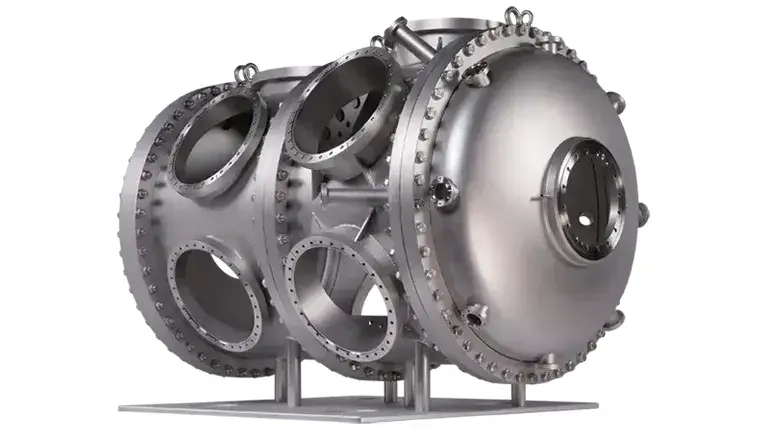
Thermal vacuum testing in a
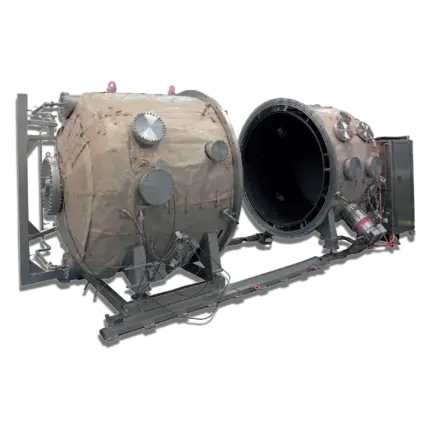
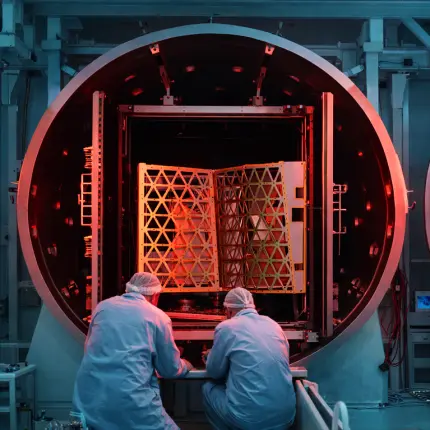
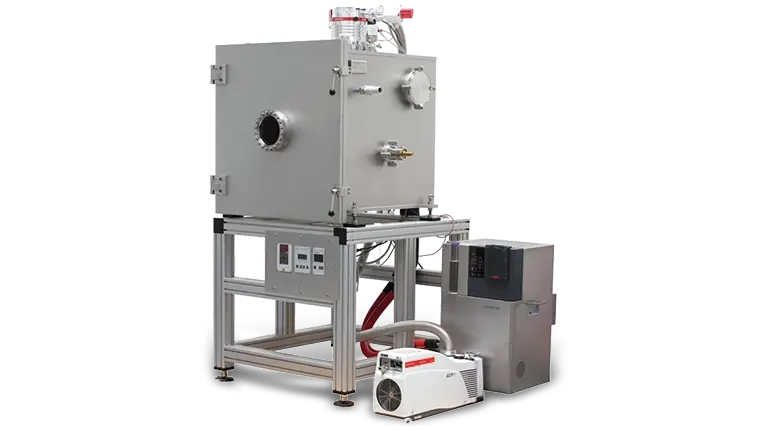
thermal vacuum chamber (TVAC) combines stable low-pressure conditions with defined temperature ranges over long durations to ensure consistent component behavior under simulated space environments. For space-related applications, this often includes
temperatures from -80 °C up to >150 °C, which require dedicated cooling or heating concepts inside the vacuum chamber.
To achieve these conditions, chambers can be equipped with a
thermal shroud – also referred to as a
cold shroud or
thermal shield – connected to
thermofluid thermostats capable of reaching such temperatures. The shroud provides uniform surfaces and stabilizes thermal behavior during cycling.
Structural integrity is confirmed using
helium leak testing, which offers the sensitivity needed to detect very small leak rates in welded structures for thermal vacuum applications. Interior surfaces can be
electropolished or prepared with other
low-outgassing finishes to maintain clean and stable vacuum conditions throughout the test.